Building Sustainable Device Ecosystems: Digitunity’s Guiding Framework
To be fully integrated into today’s digital society, individuals need access to a connected, large-screen computer. Owning a computer opens the door to opportunity across education, employment, healthcare, civic engagement, and more.
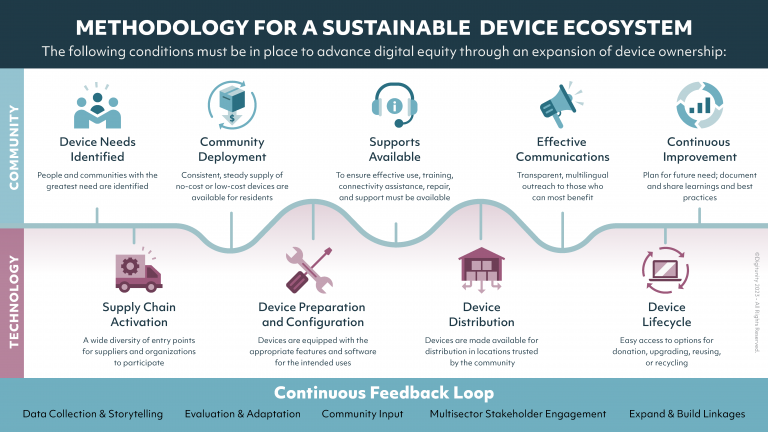
Knowing this, Digitunity developed the “Methodology for a Sustainable Device Ecosystem,” which provides communities with a practical framework for building long-term, reliable systems that provide free or low-cost computers to everyone. By supporting systemic solutions, this approach supports residents impacted by the digital divide beyond temporary solutions.
Why a Sustainable Ecosystem Matters
An estimated 36 million people in the U.S. are without a home computer. This impedes their participation in education, work, healthcare, and civic life. To address this issue, more donations are needed. A lasting, community-wide impact calls for rethinking and rebuilding the systems that facilitate computer ownership.
Digitunity’s framework outlines the core conditions communities need to cultivate a robust and equitable device ecosystem. It includes guidance on:
- Establishing a steady, local supply of devices
- Preparing and distributing devices for practical use
- Ensuring access is unbiased and aligned with community needs
- Integrating digital skills training and support alongside devices
“By releasing this framework, we hope to demonstrate to states, municipalities, coalitions, and community groups that by working collaboratively, it is within our reach to develop a lasting solution that makes it possible for residents in need to obtain affordable computers."
Scot Henley, Executive Director, Digitunity Tweet
Systems Change, Not Short-Term Solutions
Digitunity serves as a field catalyst—offering tools, expertise, and strategic insight to help communities, governments, and organizations shift from transactional approaches to systemic change. The framework is designed to guide policy and practice, especially as communities navigate opportunities like the Infrastructure Investment and Jobs Act and other large-scale funding initiatives.
A Call for Collaboration
The guidance emphasizes that lasting solutions require the combined efforts of corporate partners, government agencies, philanthropy, and nonprofits. Digitunity collaborates with a wide range of stakeholders to co-create resilient systems that make device ownership possible for everyone, now and into the future.
We partner with states, municipalities, coalitions, and community-based organizations to design and implement sustainable device ecosystems. Explore how we can support your efforts.