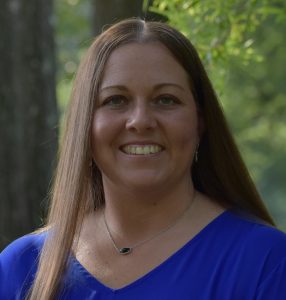
Kelli Stephens
In rural South Arkansas, smartphones are more common than computers. This difference shapes who can access education, healthcare, and economic opportunity. At the University of Arkansas at Monticello (UAM) Adult Education program, Digital Navigator Kelli Stephens sees this reality every day. As a former X-ray Technologist and Picture Archiving and Communication Systems Administrator she has seen firsthand how deeply healthcare relies on digital tools. Now, as a Digital Navigator with UAM’s Adult Education program, she sees a different side of technology’s role in people’s lives. Many adults trying to complete their GED, enroll in workforce programs, or access healthcare services, often rely solely on a smartphone. Approximately half of the Adult Education students begin the program without access to a personal computer.
Digitunity recently interviewed Kelli Stephens to better understand how local partnerships are helping to increase computer ownership and digital skills across rural South Arkansas.
The Smartphone Paradox
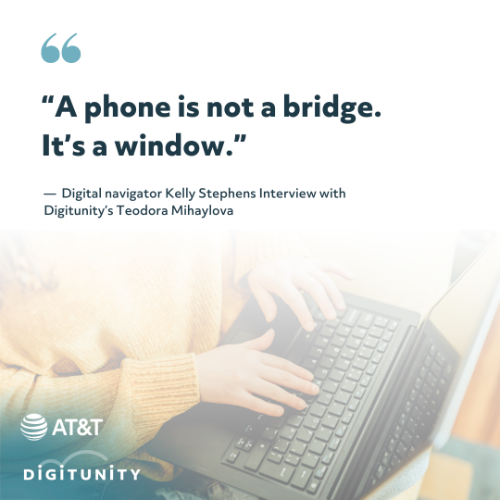
In this rural part of the state, many people think they are “connected” because they have a smartphone. But as Kelli tells her students, a phone is not a bridge; it’s just a window. You cannot comfortably write a resume on a smartphone, easily complete a complex nursing school application or attend a private telehealth appointment while sitting in a restaurant just to use their Wi-Fi.
For many students—low-income households, first-generation learners, and older adults, the absence of a computer shapes their educational and economic trajectory.
More Than Just Turning On the Computer—Providing a Foundational Digital Literacy Education
The UAM Adult Education program serves students 16 years of age and older, including adults seeking their GED and Integrated Education and Training learners (IET). The Adult Education program has 16 centers located across 8 counties in southeast Arkansas. Through the collaboration between the University of Arkansas at Monticello-College of Technology McGehee (UAM-CTM), Digitunity, and AT&T, UAM-CTM is not just handing out laptop computers but providing a lifeline. UAM-CTM offers two different pathways for students to receive laptops. Students enrolled in the Adult Education program who completed GED and the WAGE I employability course along with the Connected Learning Digital Literacy course or students who completed the WAGE I, WAGE II and an IET along with the Connected Learning Digital Literacy course can receive a laptop to keep. Additionally, UAM-CTM is lending laptops to students enrolled in the Health Information Technology and Business Office Technology programs, and upon program completion, students receive their own laptop.
A Task-Based Future
The Connected Learning curriculum focuses on the computer basics: email basics, videoconferencing basics, internet basics, cybersecurity, and QR codes, among others. Kelli believes that students can also benefit from task-based instruction that would complement the skills based curriculum. Instead of just teaching “how to save a file,” students can learn:
- Healthcare Literacy: How to navigate a patient portal, write an email to a doctor and attend a virtual appointment.
- Financial Literacy: Managing online banking safely.
- Professional Online Presence: Building a digital footprint that helps, rather than hinders, job prospects.
Small Classes, Big Impact
To accommodate students who are both parents and full-time workers, the Adult Education program keeps classes small—sometimes just two to four students. This allows for one-on-one support when students need a more personalized and comprehensive digital literacy instruction. The Adult Education program offers multiple workshop locations to provide a greater level of flexibility for students and reduce the need for travel to the University campus in McGehee.
Students Overcoming Barriers
Kelli shared that some students do not have internet access at home and have to use community resources such as the local library or the public WI-FI at local restaurants to go online. Most students have access only to a smartphone, which is insufficient to complete their educational program. To overcome these barriers, students have access to computer labs, loaner laptops and hotspots they can take home to connect to the internet and complete their coursework.
The University of Arkansas at Monticello-College of Technology McGehee is dedicated to closing the digital divide in rural Arkansas. The UAM-CTM collaboration with AT&T and Digitunity will allow 250 students to receive their own computer at the completion of their studies. These laptops provide education access, healthcare access and economic development opportunities to both students and their families.
In the local community, the digital divide is most pronounced among low-income households, adult learners, first-generation college students, older adults, and unemployed or underemployed individuals. In many households, the only available device is a smartphone. While phones provide internet connection, they do not allow someone to:
- Complete their education
- Write and format a resume
- Apply for a job
- Access complex online systems
- Attend private telehealth appointments from home.
Increasing Computer Ownership
Sustained progress in closing the digital divide in rural south Arkansas depends on coordinated action that ensures students have a reliable computer at home, internet connectivity, digital skills training, technical support, and safe, accessible learning spaces. Leveraging new partner collaborations can create funding opportunities for universities, schools, libraries, healthcare providers and non-profit organizations to tackle the digital divide. Implementing computer distribution programs paired with digital skills training is one of the most direct ways to meet the needs of the local community.
Watching a student realize they can start their own business, search for a job or communicate with their child’s teacher from their own living room is what inspires Kelli to do this work.
Kelli recalled speaking with a student in his 50s who just earned his GED and joined the local sheriff’s department. He told her, “I don’t want just this computer. I want to know how to use it so that it can help me in my personal life.” He grew up in a world without screens, and now he’s walking into doctors’ offices where the first question is, “Did you fill out the forms in the online portal?” Kelli is working to get him into a class—even if it has to be one-on-one—because that confidence gained is life-changing.
Communities benefit when residents have the skills to navigate online systems for work, education, healthcare, and civic participation. When our neighbors are connected, South Arkansas is stronger.
"This collaboration with Digitunity and AT&T represents more than providing laptops—it represents providing access, opportunity, and hope for the students and communities we serve. Nearly half of our Adult Education students enter our program without a personal computer, which places them at an immediate disadvantage in education, workforce training, and even healthcare access. By equipping students with both the technology and the digital skills to use it effectively, we are removing one of the most significant barriers to economic mobility in rural South Arkansas. This initiative creates a direct pathway for our students to transition from Adult Education into postsecondary programs at the University of Arkansas at Monticello and its Colleges of Technology, where they can earn industry-recognized credentials and degrees that lead to high-demand, high-wage careers. Ultimately, this work is not just about technology—it is about transforming lives, strengthening families, and building a more educated and economically resilient region."
- Dr. Dorissa Kaufman, Director of UAM Adult Education
Kelli Stephens is a Digital Navigator who is teaching digital literacy skills to students as part of UAM-CTMs participation in the 3 Southern States Connected Community Program. This program is a collaboration between Digitunity and AT&T designed to increase computer ownership and digital skills across Arkansas, Louisiana, and Mississippi. Through this project, UAM-CTM will help connect residents with refurbished computers, digital skills training, and one-on-one support from trained digital navigators. This work allows more people in our community to use technology for education, employment, health, and daily life.
About Digitunity
Digitunity is a national nonprofit organization making computer ownership possible for everyone. For more than 40 years, Digitunity has worked to close the digital divide in the United States by shaping and strengthening systems that make computer ownership possible. Digitunity sources and places computers with a network of over 1,600 community-based organizations, supports digital skills programs, and provides strategic advisory services to states and cities. With 1 in 7 U.S. households lacking a computer at home, this national-local approach mobilizes resources, influences policy, and builds durable solutions that expand opportunity, participation, and economic mobility. Learn more at digitunity.org.
About Philanthropy at AT&T
At AT&T, our corporate responsibility work is dedicated to bridging the digital divide across the country. We are committed to providing people of all ages and from every community with the essential resources they need to thrive in the digital era. For generations, we have supported programs that impact millions of individuals nationwide, and since 2021, we have committed $5 billion to initiatives that enhance connectivity, promote digital literacy, and improve access to high-speed internet. Our efforts particularly focus on uplifting underserved communities, including students, older adults, and un- or underemployed individuals, ensuring everyone can participate in the digital world and benefit from its opportunities.