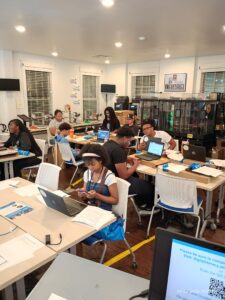
In communities across the United States, there are significant disparities in computer ownership, and the systems for providing and delivering these resources require development. Urban and, particularly, rural areas suffer from a digital divide exacerbated by the lack of affordable large-screen computers and inadequate digital skills training.
It is critical that data and resident feedback are available and utilized to develop targeted and effective solutions. Community anchor institutions, nonprofit organizations, and policymakers may struggle to create and implement initiatives that close the digital gap and promote digital equity in underserved areas when they don’t have a clear understanding of the barriers community members face. This disparity can be addressed by gathering insights from residents, collaborating with local partners, and developing innovative strategies to ensure access to devices, digital skills training, and support that are tailored to the needs of the community.
On May 18th, two impactful events to help close the digital divide and improve the digital skills of underserved communities were held and supported, in part, by AT&T and Digitunity. They were facilitated through Digitunity’s nationwide network of community-level practitioner organizations. The events stand out for their focus on resident leadership and fostering the adoption of digital literacy resources among those most affected by the digital divide.
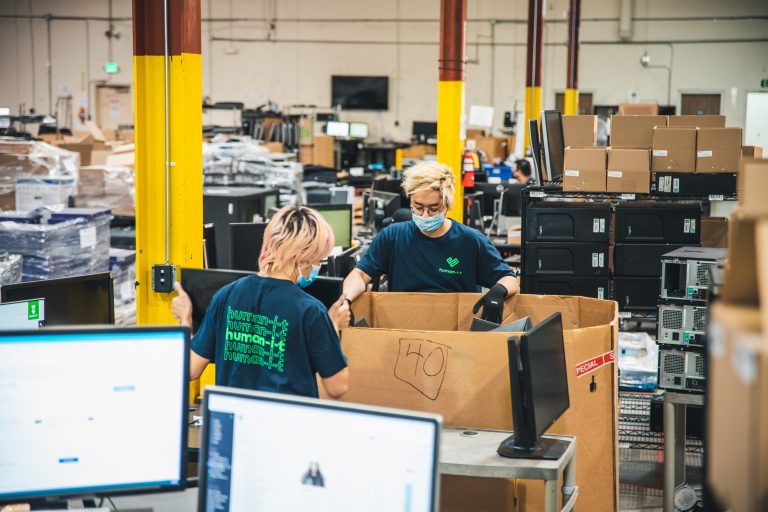
Beatriz Fritschler, Deputy Commissioner of DSSs, commented on the project's success, stating: “We are profoundly grateful to Digitunity and AT&T for their generous donation of 1,742 refurbished laptops. These laptops are transformative for our youth ages 12-17 in shelters, providing essential tools to complete school assignments and succeed academically. By bridging the digital divide, we empower these young individuals, fostering their potential and brightening their future. This partnership reflects our collective dedication to creating equal opportunities and supporting the educational aspirations of New York City’s most vulnerable children”
To achieve this impact, the municipal government nonprofit organizations and technology donors collaborated to address a major social problem. This partnership effectively leveraged diverse resources, expertise, and networks from different sectors to achieve a common objective. The model can provide a blueprint for how different organizations can collaborate to enhance digital equity in other cities facing similar challenges.
Scalability and adaptability are among the key strengths of the New York City initiative, making it an inspiration for other cities working to close the digital divide. The framework employed—from identifying the needs of residents to deploying devices to providing ongoing support—can be customized to meet various contexts, scales, and local challenges. By leveraging existing infrastructures and forging new partnerships, cities can extend digital access and highlight the importance of technology as a cornerstone for educational equity. Digitunity’s online donation matching platform streamlined the process of identifying available devices from donors and matching them to shelters in need, facilitating the logistical coordination for deploying computers and this matching continues contingent on technology donors offering computers.
The project’s tangible benefits and significant social impact serve as a compelling example, encouraging other municipalities to consider similar initiatives while emphasizing the critical role digital access plays in creating a level playing field for all students. Strategic collaborations and well-planned logistical operations can profoundly affect students’ educational experiences. With collective effort and a shared vision, this project stands as a testament to what can be achieved to reduce digital divides in other cities.
Are you ready to make a change in your community? Join us in expanding digital access and transforming educational outcomes. Contact Digitunity today to discover how you can support efforts to close the digital divide in your city. Together, we can ensure every student has the tools they need to succeed. Contact info@digitunity.org to discuss bringing this proven model to your municipality.