Device Ownership Matters

hands on laptop keyboard with title

Access to large-screen computing devices (e.g. laptops, desktops) is essential to protect against the creation of a second class digital citizen.

Digitunity commissioned leading expert Amy Gonzales, an Associate Professor of the Department of Communication at the University of California, Santa Barbara, to examine the importance of large screen device ownership and the impact that disparities in ownership by race and income have between groups of people, especially those in marginalized groups.

This original report provides an evidenced-based discussion for why access to large-screen computing devices (e.g. laptops, desktops) is essential to protect against the creation of a second class digital citizen, and provides five recommendations on how to close the digital divide nationwide.

The way out of the digital divide must include scalable solutions that provide a lasting pathway to large-screen device ownership and ongoing support so that everyone who needs a computer can have one. 

Register below and click the download button to be sent a PDF copy of the report.

Download the Device Ownership Matters: The Importance of Large-Screen Device Ownership Report.
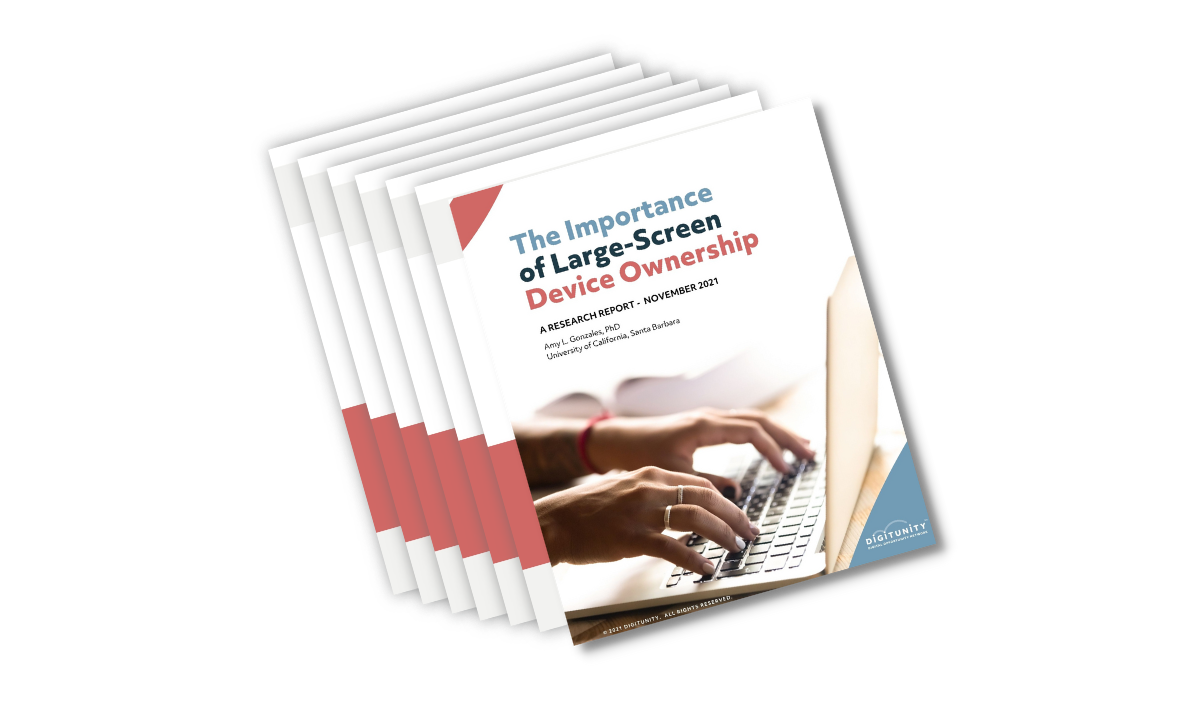
device ownership matters report mock up

Other Recent Posts

A man stands in front of a green CACRC backdrop, holding an open laptop and smiling, dressed in a black polo and sneakers.

How One Louisiana Nonprofit is Strengthening Computer Ownership Across the Gulf South

In Louisiana, a non-profit technology refurbisher addresses an overlooked digital divide by giving computers a second life and a second home. The computer ownership gap across Arkansas, Louisiana, and Mississippi is among the deepest in the nation. In these Southern states, 2024 American Community Survey data shows that 1 in 5 households or a total of 929,620 households, did not have access to a computer or relied solely on a smartphone for their internet connectivity.

Head-and-shoulders portrait of a smiling woman with long brown hair wearing a blue top and a necklace, photographed outdoors with trees and soft greenery in the background.

Computer Ownership & Skills Matter: A Conversation with a Digital Navigator in South Arkansas

Kelli Stephens In rural South Arkansas, smartphones are more common than computers. This difference shapes who can access education, healthcare, and economic opportunity. At the University of Arkansas at Monticello (UAM) Adult Education program, Digital Navigator Kelli Stephens sees this reality every day. As a former X-ray Technologist and Picture Archiving and Communication Systems Administrator she has seen firsthand how deeply healthcare relies on digital tools. Now, as a Digital Navigator with UAM’s Adult Education

Group of students and staff posing indoors in front of a UAM College of Technology–McGehee banner and table display, several holding bright green tote bags, with a green school mascot standing behind them.

UAM-CTM Launches Digital Literacy Program to Expand Computer Ownership in Southeast Arkansas

On January 21, the University of Arkansas at Monticello College of Technology–McGehee (UAM-CTM) and the UAM Adult Education Center officially launched the UAM Digital Literacy Program, a new initiative designed to expand computer access and strengthen digital skills for adult learners across southeast Arkansas. The program is part of the 3 Southern States Connected Communities Program, a regional effort led by Digitunity and AT&T to address persistent technology barriers in underserved and rural communities. Through

Translate »

The need for computers has never been greater.​ Sign up for our newsletter.