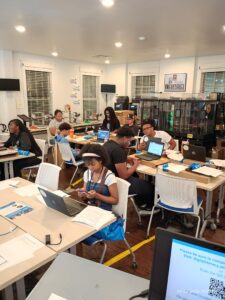
A new analysis on why policy momentum requires stronger implementation systems
We believe the nation’s ability to compete in an AI-driven economy depends on building skills at scale. Federal agencies, state leaders, and workforce systems are moving quickly to expand AI education and training.
While policy momentum is clear, the underlying infrastructure necessary for implementation has failed to keep pace.
AI literacy is not achieved through a single session or a short-term course; it requires consistent, self-directed practice on a personal device. For more than 32.9 million people in the US, this essential tool is missing from their homes. Without computer ownership, even the most intentional training programs face structural limitations in delivering on their promise.
What You’ll Find in the Report
New federal guidance has established AI skills as a national priority and identified device access as a prerequisite for participation. But policy intent and program infrastructure aren’t moving at the same speed.
This report looks at what that means in practice, for funders, policymakers, and system leaders:
- How federal policy defines AI literacy and the conditions required to achieve it
- Where current workforce and education investments hit structural limits
- Why computer ownership belongs in program design, not the footnotes
- What a coordinated response looks like across supply, deployment, and policy
Why This Matters for Funders and System Leaders
Significant investments are being made to expand AI training across education and workforce systems. Whether those investments hold depends on whether the people they’re designed to reach can show up consistently, practice independently, and build skills over time.
When computer ownership is part of program design, people can practice independently, complete training on their own timeline, and build skills that show up in employment data. When it isn’t, programs are asking people to develop durable competencies without the tools those competencies require.
The limiting factor isn’t program quality. Solving it means treating computer ownership as a design requirement and building systems that reliably put devices in people’s hands across every community these programs are meant to reach.
Explore More on AI

How Philanthropy Can Fund Truly Inclusive AI
What Funders Are Missing About “Inclusive AI”
In this perspective piece, Digitunity Executive Director Scot Henley explains why inclusive AI must begin with computer ownership, agency, and systems-level change.
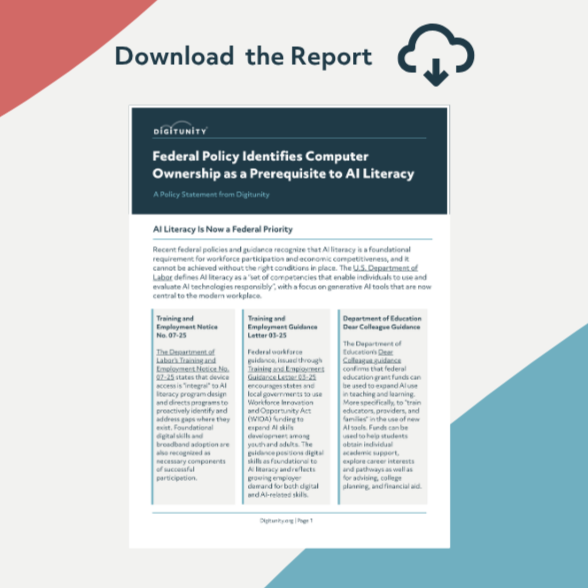
Computer Ownership Is a Prerequisite for AI Literacy
As AI literacy becomes a growing federal priority, computer ownership must be part of the implementation strategy. Digitunity’s policy statement explains why personal computers are essential to sustained AI skill development and offers recommendations to close the gap between policy goals and meaningful participation.