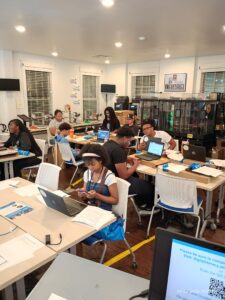
The non-profit organization helps close the technology gap by providing computers to those who need them most.
NORTH CONWAY, NH, August 29, 2022 – Statistics show people with disabilities are less than half as likely to own a computer than those without. That’s why Digitunity, a national nonprofit organization connecting donors of computers with organizations serving people in need of technology for education and work, works to close the digital divide that disproportionately affects this particular population.
People with disabilities make up one of the nation’s largest disadvantaged groups. About 61 million people in America, 26% of the population, have a disability, according to the National Center on Birth Defects and Developmental Disabilities. According to a United Nations study on disability and employment, people with disabilities are less likely to be employed.
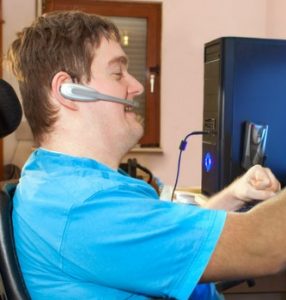
In the U.S., about 35% of working-age people with disabilities are employed, compared to 78% of the rest of the population. The UN also found that two-thirds of unemployed respondents with disabilities want to work but could not find jobs. This gap persists regardless of educational attainment.
The American Institute for Research found that annual household income for people with disabilities is $23,300 less than those without. That disparity in income makes people with disabilities about half as likely to own a computer, Pew Research found in 2021, which inspired Digitunity’s endeavors.
"We know that in today's society, having a computer in your home is essential to educational and economic achievement. Better access to technology can be the defining factor in helping people with disabilities overcome challenges they face in the job market and have stable, successful lives."
Scot Henley, Executive Director of Digitunity Tweet
Digitunity reaches communities, including people with disabilities, through its Digital Opportunity Network of more than 1,500 businesses, nonprofits, faith-based groups, schools, government agencies, and technology refurbishers. These partners work together to create an impact in communities nationwide by distributing technology to those who need it.
Digitunity also recently launched the Corporate Pledge to End the Digital Divide, where companies that sign the pledge commit to support digital equity by donating new or end-of-cycle computers or making a financial contribution to advance computer access and digital skills. Several major corporate donors have already signed the pledge and made contributions.
By connecting corporations’ technology nearing the end of its life cycle with organizations and people in need of computer donations, Digitunity also turns problems like e-waste into solutions that help communities. As a result, nearly 400,000 devices have been distributed across Digitunity’s Opportunity Network. Learn more here.