Digitunity Reaches 10,000 Learners with Digital Skills Training

In collaboration with AT&T, Digitunity is proud to have helped reach a significant milestone—providing 10,932 people across the United States with digital skills training through the Connected Learning Award Program. As a national nonprofit dedicated to making computer ownership possible for everyone, we are honored to support this work. 


For four decades, Digitunity has worked to ensure that everyone has access to both computers and the skills needed to use them effectively. More than 47 million Americans do not own a computer and cannot use essential digital tools like word processing, email, and spreadsheets—barriers that limit access to education, healthcare, employment, and financial services.

Expanding Access Through Community Partnerships

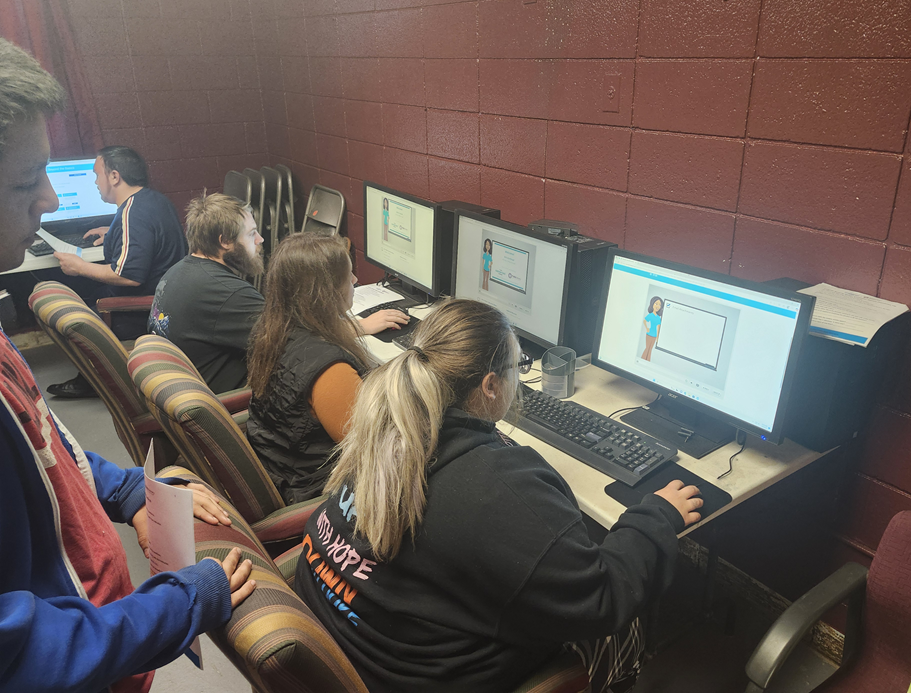
Digitunity partnered with AT&T through this program to provide the company’s Connected Learning curriculum, which covers essential topics such as video conferencing, email, cybersecurity, and mobile device basics.

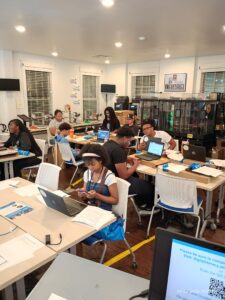
The program supported 745 workshops with 57 organizations across 22 states, empowering local community groups to deliver instructor-led workshops tailored to the needs of seniors, individuals in active recovery, and rural residents.

Digitunity takes a holistic, systems-level approach to breaking down barriers to computer ownership, partnering with major corporations and community organizations to ensure people have both the devices and the digital skills needed to use them effectively.

“The impact on our learners has been transformative, and we’re looking forward to helping even more people improve their digital skills,” said Mary Carlson, digital literacy specialist at Rhode Island Regional Adult Learning (RIRAL).

“This experience has been compelling, breaking down barriers for vulnerable individuals by providing them with fundamental computer skills they would likely not have obtained through other means,” said Frankie Garcia-Leon, administrator at participating organization Hope House Guthrie in Oklahoma.

The Connection Between Computer Ownership and Digital Skills

Owning a computer is a critical first step toward digital inclusion, but having the skills to use it effectively is just as essential. Access to technology alone is not enough—without digital skills, individuals struggle to apply for jobs, complete schoolwork, manage finances, or access healthcare services online.

By pairing computer ownership with high-quality digital skills training, Digitunity ensures that more people can fully participate in today’s digital world. It helps individuals build independence, connect with their communities, and unlock new personal and professional growth opportunities.

Read the full story here

Digitunity is a national nonprofit organization with a mission to make owning a computer possible for everyone. Engaged in advancing digital opportunity for nearly forty years, Digitunity generates and places donated computers with organizations serving people in need, supports a national practitioner network, and advises states, cities, and coalitions on strategies to meet the ongoing device needs of people impacted by the digital divide.

Other Recent Posts

A man wearing a maroon polo shirt and an "Oklahoma" baseball cap sits at a wooden desk using a computer with a spreadsheet open on it.

Digital Skills in Action: From Training to the Workplace

At Hope House Guthrie, rebuilding a life often begins with learning new skills. Hope House Guthrie is a nonprofit in Guthrie, Oklahoma, that provides shelter, meals, and clothing to individuals experiencing homelessness and hardship. The organization also connects people to resources that support recovery, employment, and long-term stability. For many people entering recovery and life transformation programs, rebuilding their lives means gaining work experience, reconnecting with their community, and learning ways to navigate systems that

Cover image of Digitunity report on smartphone-only access and its limits in program design and policy.

The Smartphone-Only Assumption

Why device access shapes participation in modern systems A new analysis from Digitunity examines a common assumption in program design and policy: that smartphone access is enough. This analysis shows where that assumption breaks down. While smartphones are widely used and effective for communication and quick tasks, they are not designed for the kinds of activities required to fully participate in modern systems, such as education, employment, healthcare, and public services. In the United States,

A man stands in front of a green CACRC backdrop, holding an open laptop and smiling, dressed in a black polo and sneakers.

How One Louisiana Nonprofit is Strengthening Computer Ownership Across the Gulf South

In Louisiana, a non-profit technology refurbisher addresses an overlooked digital divide by giving computers a second life and a second home. The computer ownership gap across Arkansas, Louisiana, and Mississippi is among the deepest in the nation. In these Southern states, 2024 American Community Survey data shows that 1 in 5 households or a total of 929,620 households, did not have access to a computer or relied solely on a smartphone for their internet connectivity.

Translate »

The need for computers has never been greater.​ Sign up for our newsletter.