Empowering Human Potential in a Digitally Connected World

June 30, 2020 — Reflections from Yvette Marrin, PhD., Founder

Steven Kanor

Steven Kanor, Founder, Enabling Devices

My first glimpse of the power of technology was at a children’s rehabilitation center in White Plains, NY in 1981. An engineer crafted some switches that, when activated through his technical wizardry, he enabled a two-year-old child with cerebral palsy to play with a toy on his own.

For me, this was a mind blowing experience. It gave me a glimpse into what impact technology might have on a child with severe physical disabilities. The special switches enabled him to respond actively to another person’s action.

After that, when Steve Kanor, that engineer, showed me a computer that enabled handicapped children to learn that whenever they clicked down on a special switch they would see different images, I became totally hooked. Though they were clunky things and in current thinking impossibly slow, they were magical for those who explored their possibilities for empowering human potential.

Learning about the innovators working on technology-enabled solutions that could empower people with disabilities introduced me to a new world of dedicated individuals. You could learn about their work in meetings held by the Council of Exceptional ChildrenRESNA, and other conferences such as Closing the Gap, a group based in Minnesota that invited practitioners to share their findings (all early innovators for technology use by people with disabilities). They are still sharing solutions to this day. It was an honor to get to know about their work and to get their confirmation about the value of technology to empower people’s lives.

The power of technology to help us soar is creating new possibilities for realizing our potential. No one should be denied this opportunity.
- Yvette Marrin

When we started our work in 1984, National Cristina Foundation, focused on locating previously used computers as an effective low cost solution to obtaining computers, that opened up new opportunities for people with disabilities. Soon after, we added people in need as recipients. To counteract the initial negativity we encountered when we proposed putting used computers back to work again for closing the technology gap for people in need, we acquired 3,000 previously used Apple 2e computers.

The Foundation invited reputable practitioners to install them into their programs. Groups such as Johns HopkinsGeorge MasonPeabody VanderbiltMaryland State Department of EducationUnited Cerebral Palsy Association, and Maryland Rehabilitation Center became early partners to our work. 

We learned how important these computers were in support of their programs.  We designed the basis of how to best administer an effective donation program and expanded our donation program to communities across our nation. As our work continued to expand, the press of the day echoed our concern.

  • U.S. News & World Report, July 25, 1988 – “We hold out technology to people as a little shimmering dream, and then we don’t deliver.”
  • Business Week, October 10, 1988 – “If computers can go anywhere, why can’t they reach the poor?”


These were a confirmation we felt about why our pioneering agenda of technology reuse took hold. Jumping forward to June, 2020, strangely, these comments are still relevant today. In these trying times, gaining access to affordable technology devices has become even more urgent as it is now needed for people to participate in a fully digital economy. Practical solutions that involve the use of technology resources that are given a second productive life can help close the significant gaps of the digital divide.

As our nation approaches July 4, our country’s Independence Day, we find ourselves in especially challenging times. It is clearly evident that independence for all must start with the fact that digital opportunity for ALL is essential in this 21st century. Computers and related technology have become an integral part of our lives. We have learned to use devices as vehicles for learning, communication and the discovery of new pathways to build our dreams.

What might the lack of technology options mean to an individual or to a community? 

Langston Hughes describes the importance of empowerment for all of us, “Hold fast to dreams, For if dreams die, Life is a broken winged bird that cannot fly.” The power of technology to help us soar is creating new possibilities for realizing our potential. No one should be denied this opportunity. To learn more about Digitunity’s work, please visit digitunity.org.

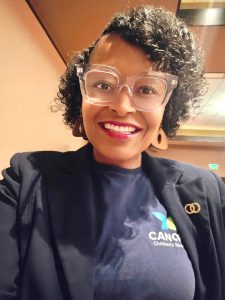
Yvette Marrin, PhD
Yvette Marrin, PhD, Co-founder of Digitunity

Other Recent Posts

Group of students and staff posing indoors in front of a UAM College of Technology–McGehee banner and table display, several holding bright green tote bags, with a green school mascot standing behind them.

UAM-CTM Launches Digital Literacy Program to Expand Computer Ownership in Southeast Arkansas

On January 21, the University of Arkansas at Monticello College of Technology–McGehee (UAM-CTM) and the UAM Adult Education Center officially launched the UAM Digital Literacy Program, a new initiative designed to expand computer access and strengthen digital skills for adult learners across southeast Arkansas. The program is part of the 3 Southern States Connected Communities Program, a regional effort led by Digitunity and AT&T to address persistent technology barriers in underserved and rural communities. Through

Person sitting at a laptop during a telehealth appointment with a masked healthcare worker on screen, while holding and filling out a health insurance form

32.9 Million People Can’t Access Critical US Government Services Due to Lack of a Computer

For the 1 in 10 people in the United States who don’t own a computer, accessing government services has become increasingly difficult. As services move increasingly online, residents without a computer and reliable internet service are locked out of essential systems. Tasks that were once handled in person now assume access to digital tools that many individuals simply do not have. Federal Policy Accelerates the Digital Shift Federal policy is accelerating this shift. The 21st

The DigITunity logo features the word "DIGITUNITY" with stylized arcs connecting the letters "I" in black and red and a registered trademark symbol.

Digitunity Announces New Officers and Welcomes New Board Members

Effective January 2026, Digitunity is delighted to introduce new Officers to its Board of Directors. These leadership transitions reflect the Board’s unwavering dedication to building and strengthening the infrastructure needed to ensure computer ownership is possible for all. New Board Officers President Allison Strobel, Executive Director, Hoboken Public Education Vice President Steven Nickel, Google Treasurer Matt Zimmer, Close the Loop Thank You to Outgoing President Jeremy Hegle Digitunity extends deep gratitude to Jeremy Hegle of

Translate »

The need for computers has never been greater.​ Sign up for our newsletter.