Key Senate Committee Passes Bipartisan Bill to Provide Computers to Veterans

The bill would allow nonprofit technology refurbishers to obtain, refurbish, and distribute surplus government computers for veterans, students, and seniors in need.
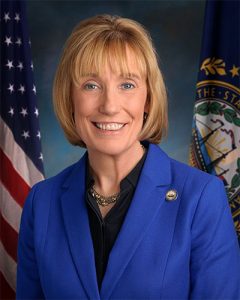
Maggie Hassan, A woman with blonde hair in a blue blazer poses in front of the American flag and a state flag.
Senator Maggie Hassan (D-NH)

SEPTEMBER 28, 2022, WASHINGTON, DC – The Senate Homeland Security and Governmental Affairs Committee advanced bipartisan legislation on Wednesday to help close the digital divide.

Introduced in the Senate by Senator Maggie Hassan (D-NH), the bill provides surplus government computers to nonprofit computer refurbishers, who would then repair and distribute them to veterans and others who need them. The bill now awaits a floor vote in the Senate.

"This bipartisan bill will help more veterans, students, and seniors have access to a computer, which will help them to do everything from completing homework to making doctor's appointments. I urge my colleagues in the Senate to pass this common sense, bipartisan bill.”

A national nonprofit focused on advancing digital access through device ownership, Digitunity has supported the bill since it was first introduced in the House of Representatives by Rep. Abigail Spanberger in 2021 as the Computers for Veterans and Students Act. The bill aligns with Digitunity’s mission to eliminate the technology gap so everyone can thrive in our digital society.

The bill would direct the General Services Administration to transfer out of service, repairable government computers to nonprofit refurbishers. The refurbishers would then repair and distribute those devices to people particularly impacted by the digital divide, including low income individuals, veterans, students, and people with disabilities. Additionally, the legislation would require each nonprofit computer refurbisher to provide training programs in the use of this technology.

In July 2022, the U.S. House unanimously passed this bipartisan legislation. Digitunity and a wide array of local, regional, and national organizations support this legislation because directing federal surplus devices to nonprofit refurbishers provides a common-sense way to help close the technology gap, especially at a time when the need for free or low-cost devices is simply staggering.

“Owning a computer unlocks opportunities for folks to participate in the modern economy. Thanks to Senator Hassan and the support of the committee, this bill now moves to the Senate floor. If passed, it will make a large supply of free and low-cost devices available to veterans, students, seniors, and others who need them.”

Other Recent Posts

Head-and-shoulders portrait of a smiling woman with long brown hair wearing a blue top and a necklace, photographed outdoors with trees and soft greenery in the background.

Computer Ownership & Skills Matter: A Conversation with a Digital Navigator in South Arkansas

Kelli Stephens In rural South Arkansas, smartphones are more common than computers. This difference shapes who can access education, healthcare, and economic opportunity. At the University of Arkansas at Monticello (UAM) Adult Education program, Digital Navigator Kelli Stephens sees this reality every day. As a former X-ray Technologist and Picture Archiving and Communication Systems Administrator she has seen firsthand how deeply healthcare relies on digital tools. Now, as a Digital Navigator with UAM’s Adult Education

Group of students and staff posing indoors in front of a UAM College of Technology–McGehee banner and table display, several holding bright green tote bags, with a green school mascot standing behind them.

UAM-CTM Launches Digital Literacy Program to Expand Computer Ownership in Southeast Arkansas

On January 21, the University of Arkansas at Monticello College of Technology–McGehee (UAM-CTM) and the UAM Adult Education Center officially launched the UAM Digital Literacy Program, a new initiative designed to expand computer access and strengthen digital skills for adult learners across southeast Arkansas. The program is part of the 3 Southern States Connected Communities Program, a regional effort led by Digitunity and AT&T to address persistent technology barriers in underserved and rural communities. Through

Person sitting at a laptop during a telehealth appointment with a masked healthcare worker on screen, while holding and filling out a health insurance form

32.9 Million People Can’t Access Critical US Government Services Due to Lack of a Computer

For the 1 in 10 people in the United States who don’t own a computer, accessing government services has become increasingly difficult. As services move increasingly online, residents without a computer and reliable internet service are locked out of essential systems. Tasks that were once handled in person now assume access to digital tools that many individuals simply do not have. Federal Policy Accelerates the Digital Shift Federal policy is accelerating this shift. The 21st

Translate »

The need for computers has never been greater.​ Sign up for our newsletter.