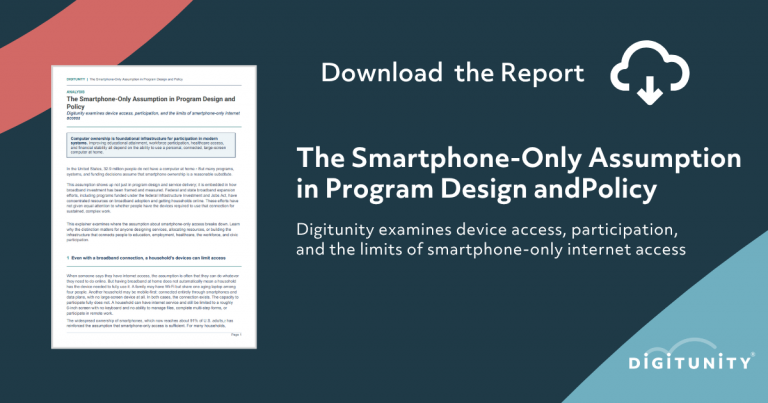
The Smartphone-Only Assumption
Why device access shapes participation in modern systems A new analysis from Digitunity examines a common assumption in program design and policy: that smartphone access is enough. This analysis shows
Why device access shapes participation in modern systems A new analysis from Digitunity examines a common assumption in program design and policy: that smartphone access is enough. This analysis shows

Digital technology has become increasingly important in our digital age. However, many people still face significant obstacles when obtaining the devices they need. Digitunity has committed nearly four decades to

A new report examines the role of audio enhancement in education, healthcare, and other applications. As multimedia experiences become more common in our digitally-connected society, the importance of immersive, clear,

A new report examines the technology gap in rural areas and identifies ways communities can spur computer donations. Rural areas in the U.S. struggle to provide residents with broadband internet

The right to repair movement is comprised of a diverse group of advocates.

This blog is the third in a series based on the report “Digital Inequalities, E-Waste, & Right-to-Repair,” authored by Dr. Amy Gonzales, that highlights digital device access policies. To read
Over a period of three installments, we will be publishing portions of this report, “Digital Inequalities, E-Waste, & Right-to-Repair,” authored by Dr. Amy Gonzales, as part of a blog series

This report highlights government legislation from around the globe that primarily informs personal ownership of computing devices. Over the next three installments, we will be publishing portions of this report,

This report highlights legislation informing personal computer ownership.
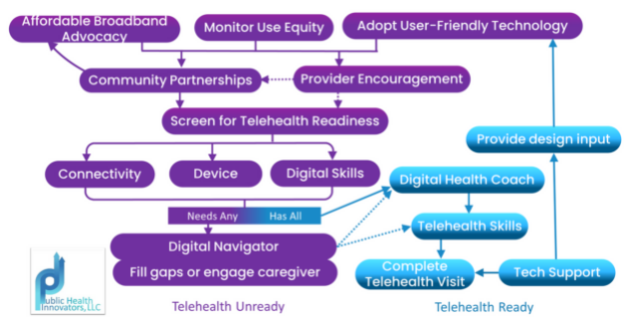
This blog, the second in an occasional series written by Digitunity’s Health Advisor, Amy Sheon, highlights opportunities for disseminating digital inclusion-related resources through healthcare. The next blog in the series will