Here are 4 ways technology can help caregivers of older adults at home:
1. Socialization
One in five older adults is socially isolated. It is likely that this number is higher considering restrictions surrounding the COVID-19 pandemic. However, technology can decrease these feelings of isolation for both caregivers and elders. Through the use of social media and video calling, caregivers and elders can communicate with friends and family across the world.
Many organizations are seeing the benefits of this type of technology in reducing isolation among elders. Most notably, The AARP Foundation and Older Adult Technology Services (OATS) developed a volunteer-managed program to provide training on iPads to low-income, socially isolated older adults.
2. Telehealth

For those who may need to travel a great distance for healthcare, telehealth can be a useful tool. It allows caregivers and those they care for to communicate with doctors and other healthcare professionals from the comfort of their own home.
Telehealth also creates stronger relationships between patients and their healthcare providers with those who succeed in completing a telehealth visit feeling “overwhelmingly positive about their virtual interactions with their care providers.” care for to communicate with doctors and other healthcare professionals from the comfort of their own home.
3. Accessing Health Records
To better track their loved one’s health, caregivers can use hospitals’ or clinics’ patient portals to access electronic health records from home. These portals can provide the caregiver access to lab test results, diagnoses, and medications. Based on these test results, caregivers can better monitor their loved one’s symptoms. They can also help the elder to take any prescribed medication as requested and request refills as they are needed.
4. Manage Appointments
Technology can also help caregivers to manage appointments. Through online patient portals, they can sign up for email or text reminders. Caregivers can also schedule or change appointments on the portal, saving them time by not requiring them to call the healthcare provider’s office.
Challenges Presented by Technology & Caregiving
While technology can alleviate a lot of the stress related to elder care, people need to be able to access the technology required to obtain this type of assistance. For example, a private space and reliable internet connection are required for telehealth visits with a doctor. If one can’t meet these requirements, they may not be able to participate in telehealth appointments to access care they or their loved one needs. Unfortunately, this is quite common with 38% of seniors unprepared to access telehealth due to technology or physical barriers.
Solutions for Caregivers & Older Adults
 Fortunately, seeing the need for access to technology to assist caregivers of older adults and those they serve, many organizations have come up with solutions. Training, financial assistance, and device donations are just some of the ways to meet challenges surrounding technology access and caregiving.
Finding this assistance doesn’t need to be difficult. Healthcare providers themselves can identify caregivers least likely to access Internet-based resources like patient portals and offer resources, like Digital Navigators, who can train them to use these tools. They can also integrate technology services into caregiver programming at their clinic or other facility.
Outside of the healthcare sector, nonprofit organizations like Digitunity are excellent resources. If a caregiver or older adult needs a device, they can visit our website to find a refurbisher near them to help provide them with a computer or other device. Using Digitunity’s online member map system here, they can find information about the refurbisher and types of devices and services they offer.
If caregivers and elders need assistance accessing the Internet, the federal government’s Affordable Connectivity Program helps individuals pay for the cost of Internet services. However, there are income and other requirements recipients must meet in order to qualify for this type of assistance. Those interested can learn more here.
In Conclusion
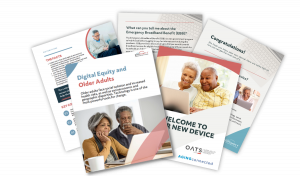 Technology has become ever more rooted in our lives, and this won’t change anytime soon. However, older adults and those who care for them often find themselves on the wrong side of the digital divide. At Digitunity, we want to be the solution to this issue, which is why we compiled some resources for older adults that you can download for free here. We hope that you or your loved one will find these resources helpful.