Why Device Support is Critical

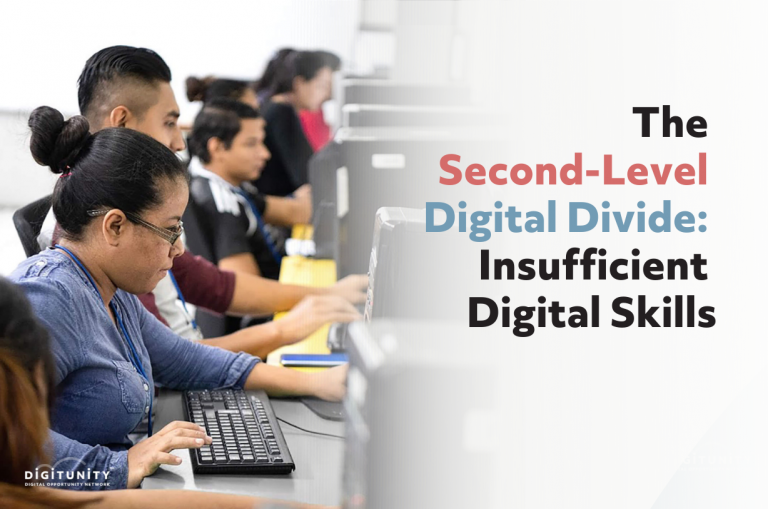
people training at a computer lab
As the amount and complexity of daily computing continues to climb,
new inequities are likely to emerge.

Where do people go for support when devices malfunction or they have questions about internet tasks?

Those working in the digital inclusion sphere know that owning a device or having in-home internet access are necessary but not sufficient steps to reduce digital inequities. A range of digital skills are also key if people are going to navigate inevitable technical setbacks and take advantage of all the internet has to offer. But where do people go for support when devices malfunction or they have questions about internet tasks?

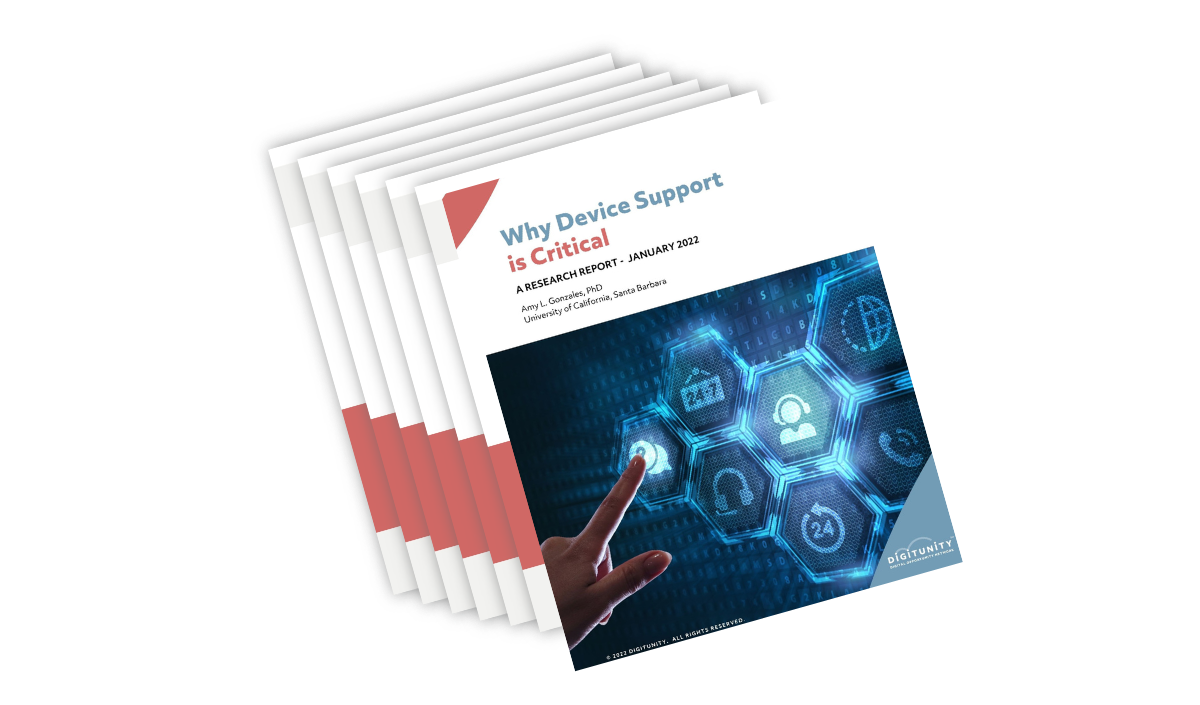
Digitunity commissioned leading expert Amy Gonzales, an Associate Professor of the Department of Communication at the University of California, Santa Barbara, to examine what type of tech problems are most disruptive to continued computer use and benefit, the current types of technical support are currently successful, and explores where there is room for improvement.

This original report provides an evidenced-based discussion, observations, and recommended solutions to build lasting pathways to the critical ongoing support required to ensure successful computer ownership.

Register below and click the download button to be sent a PDF copy of the report.

Download the Why Device Support is Critical Report
why device support product mockup

Other Recent Posts

Several people work on laptops at a crowded table; a woman in the foreground focuses on her computer screen, while others type or look at their devices.

Calling on Companies to Help Expand Computer Access Across the South

Across Arkansas, Louisiana, and Mississippi, thousands of people still lack some basic tools needed to participate fully in modern life. Although the internet is essential for education, employment, healthcare, and everyday tasks, more than one in five households in these states lack a home computer. This creates barriers that no community should face, especially given the thousands of usable computers retiring from corporate IT cycles every year. Today, Digitunity is calling on companies to be

An adult and a child sit at a computer in a library, with the child pointing at the screen and the adult using the mouse. Bookshelves are visible in the background.

Digitunity and AT&T Partner to Expand Digital Navigator Services and Computer Ownership in Rural Communities

Digitunity is proud to announce a new collaboration with AT&T, which will connect more than 13,000 people across rural Arkansas, Louisiana, and Mississippi with the tools they need to fully participate in today’s digital world. Through $725,000 in support from AT&T, this 12-month initiative will strengthen community-based organizations by equipping them with resources to expand computer ownership, digital skills training, and affordable internet access. Why This Matters Nearly 1 in 4 households in these three

A digital flyer promoting a report titled “Large-Screen Computer Ownership: A Call to Action,” with a download icon and the Digitunity logo.

Previously Unpublished Data Highlights Persistent U.S. Computer Ownership Gap in Detail

In Digitunity’s new report, we uncover who is most affected by the computer ownership gap – and why smartphones alone are not enough. A limited amount of  public data focuses only on large-screen computer ownership. Most national data combines computer and internet access, making it difficult to determine the actual need for computers. This report analyzes previously unpublished Census data on people who either have no computer at all or rely only on a smartphone

Translate »

The need for computers has never been greater.​ Sign up for our newsletter.